
Hardie vs LP SmartSide – Which Siding Is Better for Colorado Homes?
Choosing the right siding for your home in Arvada, Candelas, Leyden Rock, Five Parks, or Westminster has a big impact on long-term durability—especially in Colorado’s dry climate, harsh sun, and winter freeze-thaw cycles.
Two of the most common siding materials in newer neighborhoods are James Hardie fiber cement and LP SmartSide engineered wood. Both are excellent products when installed and maintained correctly, but they perform very differently when exposed to moisture, sprinkler overspray, snow buildup, and improper flashing.
At Arvada Handyman, we handle repairs on both types every week, and this page will help you understand the pros, cons, and typical repair needs of each so you can make the best decision for your home.
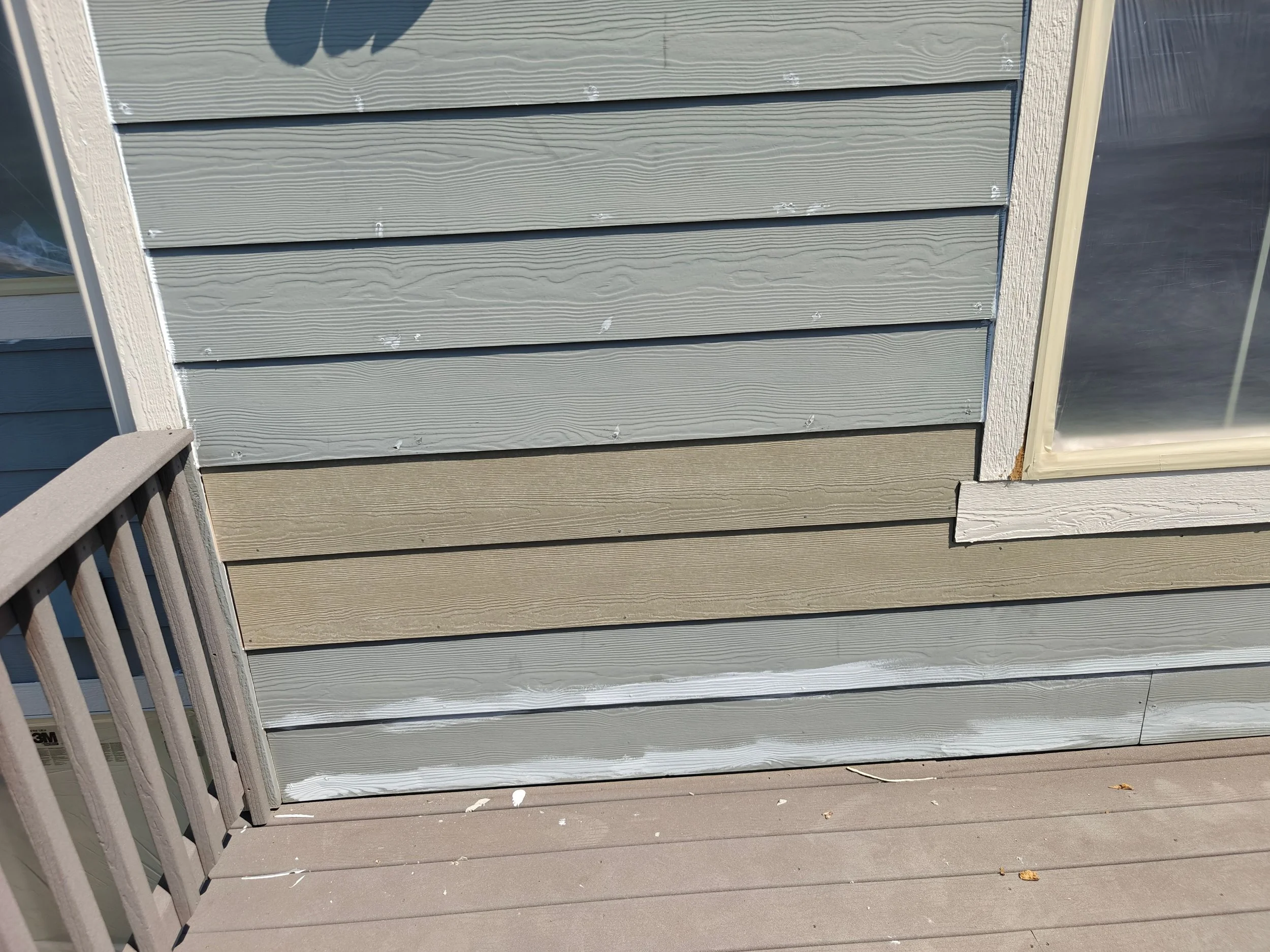
What Is James Hardie Siding?
James Hardie is a fiber cement siding, made from a mixture of cement, sand, and cellulose fibers. It’s extremely resistant to rot, insects, and fire. Hardie is known for its durability, especially in areas with moisture issues or where sprinkler overspray is common.
Key benefits:
• Highly rot resistant
• Handles moisture very well
• Fire resistant
• Does not warp in the sun
• Long paint cycles
• Great for Colorado’s high-UV elevations
Common issues we repair:
• Cracked planks from movement or impact
• Improper butt joints without flashing
• Panels installed too close to roofing or decks
• Caulking failure at trim intersections
• Delamination due to improper nailing
What Is LP SmartSide?
LP SmartSide is an engineered wood siding, made from wood strands coated in resins and compressed together. It is lighter, easier to install, and visually similar to real wood.
Key benefits:
• Impact resistant
• Lighter weight and easier for builders to install
• Flexible and less prone to cracking
• Attractive wood-grain appearance
• Often lower cost than Hardie
Common issues we repair:
• Rot from sprinkler overspray
• Softening at lower edges
• Moisture absorption at end-cuts
• Expansion at joints where caulk failed
• Damage from missing/misinstalled flashing
In neighborhoods like Candelas and Leyden Rock, moisture exposure at the lower sections of LP SmartSide is extremely common due to grade elevation, landscaping, and heavy irrigation.
How Moisture Affects Hardie and SmartSide Differently
Hardie:
Fiber cement is naturally moisture resistant. It does not rot, but it can still suffer:
• Cracking if installed improperly
• Paint failure if water sits on horizontal trim
• Damaged edges if planks touch concrete or soil
LP SmartSide:
Engineered wood absorbs water quickly when exposed. The most common failures we see include:
• Edges swelling and becoming soft
• Visible rippling on longer runs
• Rot where caulk has opened
• Bottom edges flaking off
• Mitered corners deteriorating
In Colorado communities with heavy sprinklers, LP SmartSide needs far more maintenance than Hardie.
Durability Comparison
Hardie Durability:
Hardie is extremely long-lasting when installed correctly. It holds up to high winds, snow, intense sunlight, and moisture. Many older Hardie installs still look great after 20+ years.
LP SmartSide Durability:
SmartSide is strong but only when protected from water. Once moisture penetrates seams, edges, or exposed end grain, deterioration accelerates rapidly. Homes with poor caulking or missing flashing often require early repairs—sometimes within 5 to 7 years.
Installation Differences
Hardie requires:
• Correct spacing
• Specific nailing patterns
• Proper flashing behind every butt joint
• Adequate clearance to roofing, grade, and concrete
• Cutting with specialized blades
LP SmartSide requires:
• Painted and sealed end cuts
• Perfect caulking at joints
• Protection from water intrusion
• Careful installation to avoid moisture exposure
Builders often choose SmartSide because it installs faster—but improper installation causes many of the repairs we see in Arvada and Westminster today.
Maintenance Requirements
Hardie Maintenance:
• Inspect caulking every 3–5 years
• Repaint about every 10–12 years
• Keep sprinklers aimed away from walls
• Maintain proper drainage around the home
LP SmartSide Maintenance:
• Caulk inspections every 1–2 years
• Repaint every 5–7 years
• Ensure all end cuts stay sealed
• Avoid heavy snow stacking and sprinkler overspray
• Maintain well-sloped grade around the home
If SmartSide is not maintained, moisture damage is almost guaranteed.
Typical Repairs We Perform
Hardie Repairs:
• Replace single planks or damaged sections
• Repair cracked boards from impact
• Re-flash siding butt joints
• Correct clearance issues
• Fix caulk separation around windows and trim
LP SmartSide Repairs:
• Replace swollen or rotted planks
• Correct improperly sealed joints
• Replace mitered corners
• Resolve lower-edge deterioration from sprinklers
• Address rot around windows and doors
We also correct water entry points, which is the most overlooked step by most contractors.
Which Material Is Better for Colorado?
Hardie is the best long-term option for homes in Arvada, Candelas, Leyden Rock, and Five Parks due to:
• High sun exposure
• Freeze-thaw cycles
• Sprinkler overspray
• Heavy winter snow resting against siding
LP SmartSide performs well too, but only when:
• Caulking is maintained yearly
• End cuts are fully sealed
• Flashing is correct
• Water exposure is controlled
Local Experience Matters
We repair both siding types weekly throughout:
• Arvada
• Candelas
• Leyden Rock
• Five Parks
• Westminster
Homes built between 2015–2022 in these neighborhoods often show similar patterns of failure. Our familiarity with local building practices helps us diagnose siding issues quickly and accurately.
Fast Quotes. Easy Scheduling. Local Team.
Most siding repair estimates can be done from photos. No sales pressure. No unnecessary upselling.
Text Photos for a Quick Estimate: 303-335-9920
or
Request a Quote by Email: Contact@Arvada-handyman.com
or
We are a small local team. We do the work ourselves. And we do repairs the right way so it lasts.